Lightweight roof systems for open urban and architectural conditions.
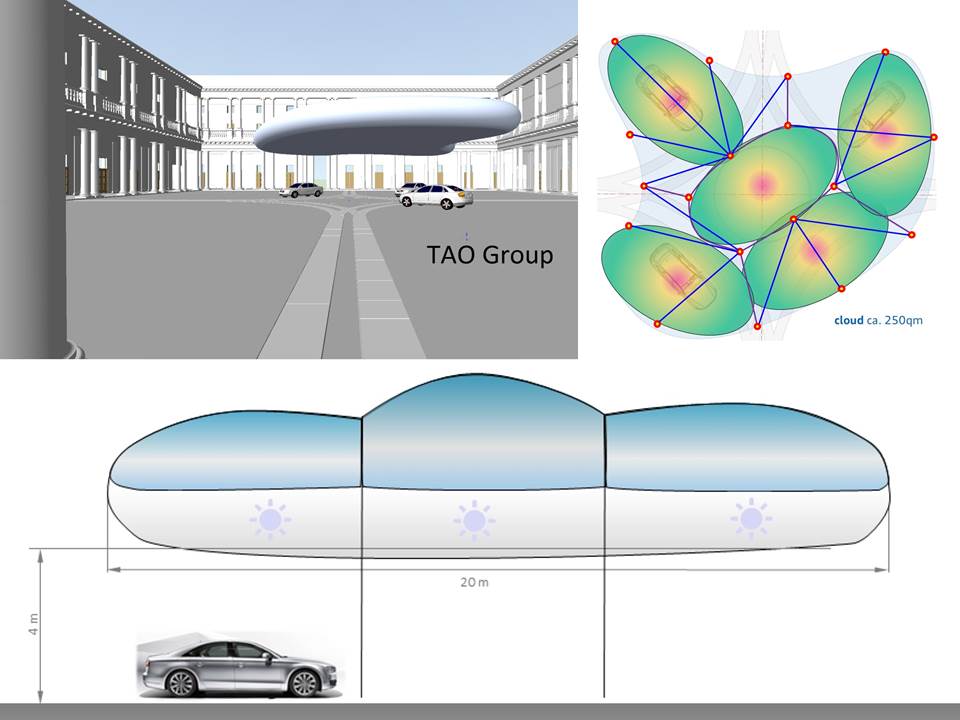
Inflatable roofs create shelter with minimal mass, soft surfaces, and spatial clarity.
"Cities have always expanded outward. Perhaps their future lies above."
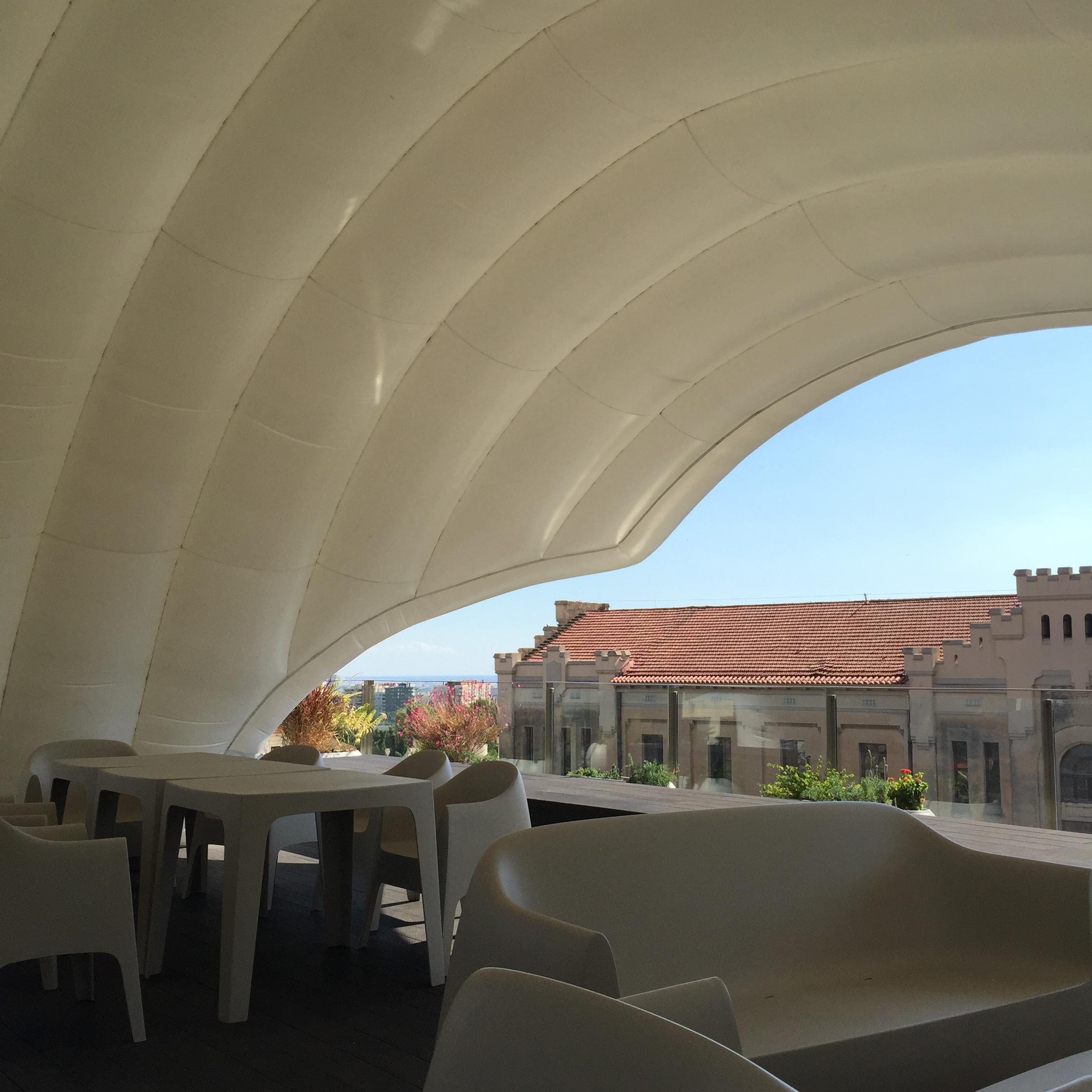
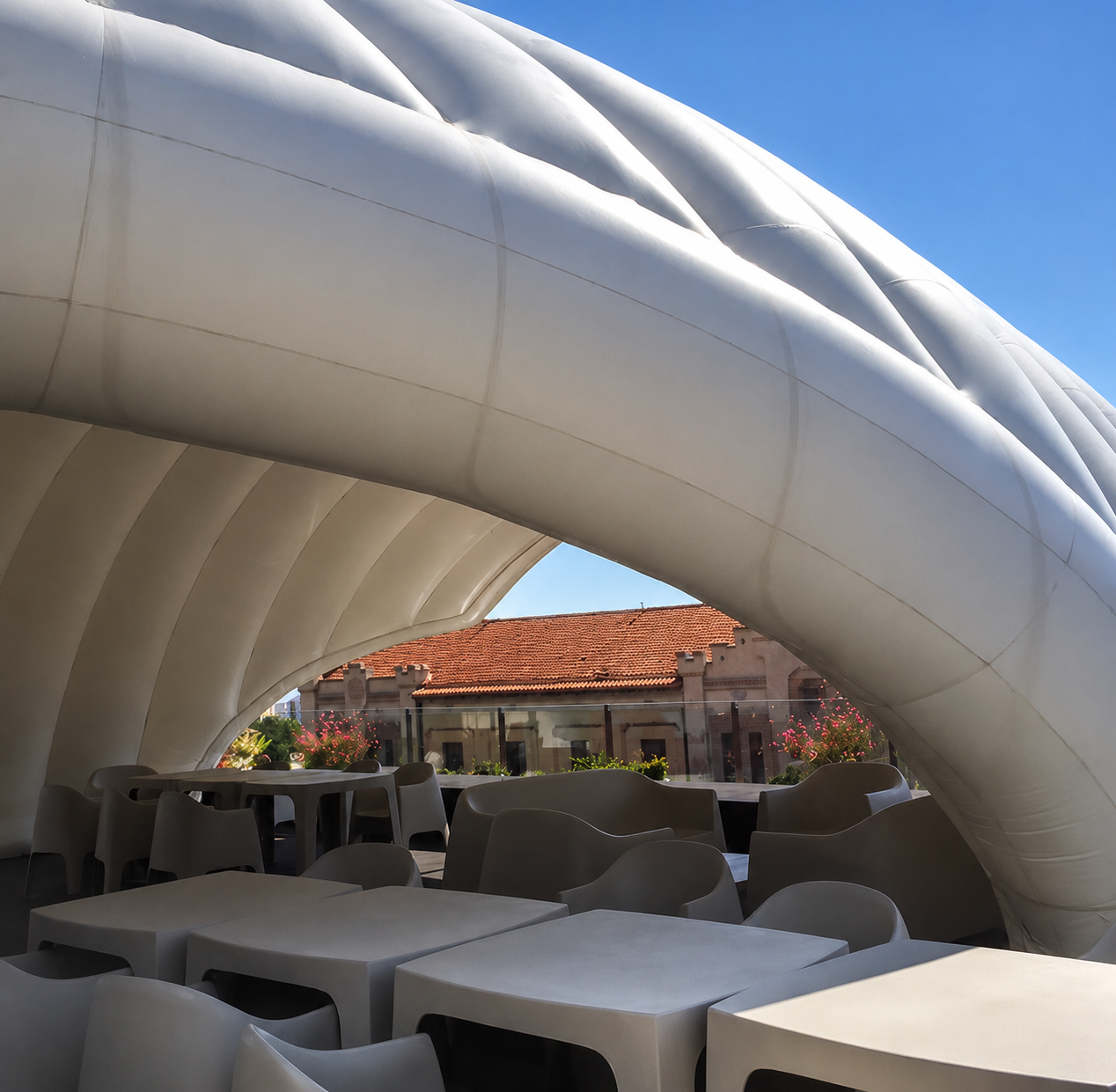
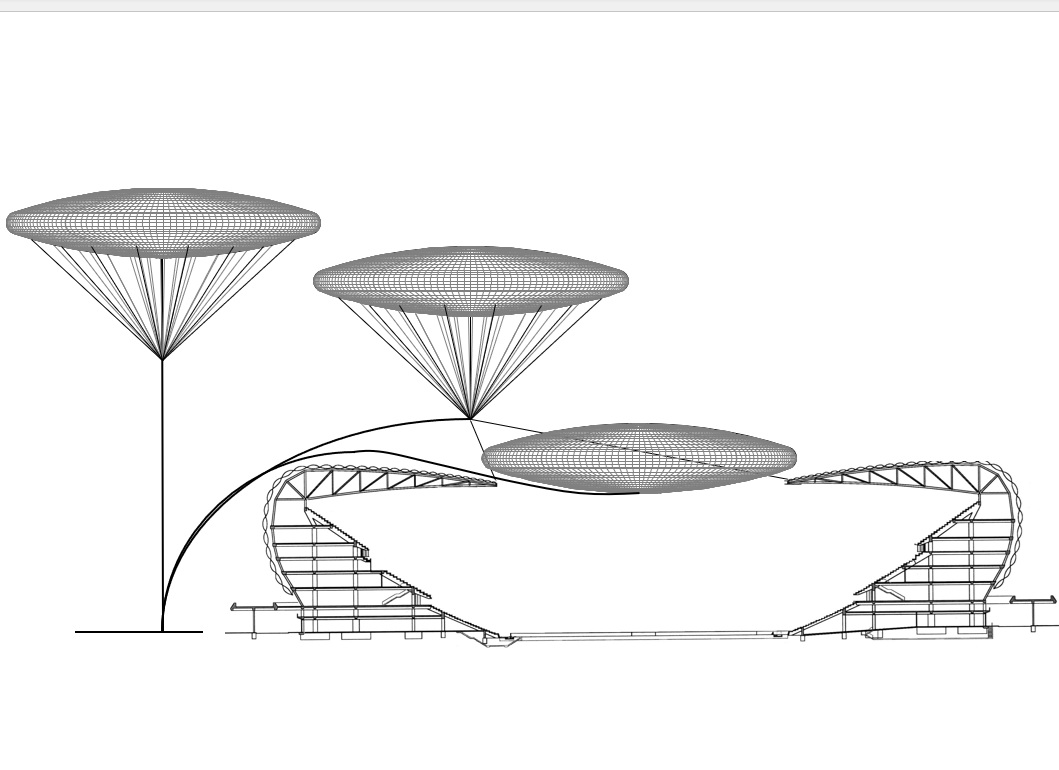
As our cities become denser, every square metre grows more valuable. Yet one of the greatest architectural opportunities already exists above us. The Barcelona Rooftop project explores how lightweight inflatable architecture can transform unused rooftops into vibrant, atmospheric places without adding the weight and complexity of conventional construction. It is not about building more. It is about revealing the hidden potential of the city itself. Rather than replacing what already exists, the project introduces a new architectural layer that gently settles above the urban fabric. A continuous white membrane creates a calm and protected environment where daylight is softened, the skyline remains present and the noise of the city fades into the background. The structure does not compete with its surroundings; it enhances them. Space is no longer defined by walls and roofs alone, but by light, air and carefully controlled geometry. The result is an architecture that feels surprisingly light, both physically and emotionally. It demonstrates that urban expansion does not always require more concrete or steel. Sometimes the most meaningful interventions are those that leave the smallest footprint while creating the greatest spatial experience. Although the architecture appears effortless, its simplicity is the result of highly sophisticated engineering. The membrane is stabilised through precisely controlled air pressure, structural tension and carefully calculated anchoring systems derived from decades of aerospace lightweight engineering. Every detail—from membrane geometry to wind response and environmental interaction—is designed to achieve equilibrium rather than resistance. The Barcelona Rooftop demonstrates that inflatable architecture is not a temporary curiosity, but a mature architectural technology capable of creating elegant, adaptable and sustainable urban environments. It suggests a future where cities grow not through heavier structures, but through lighter ideas that transform the spaces we already have.
The future of urban architecture is not measured by height or mass, but by the intelligence with which we transform existing space.
Begin a conversation with us about lightweight roof architecture.
For project inquiries, collaborations, and research-led spatial proposals, contact the TAO Group team directly.
Email the studio