Light Spatial Objects that hold form through air, pressure, and precision.
Inflatable architecture becomes a serious architectural medium when softness is paired with structural discipline.
"Architecture has always trusted the ground. Project HELION chose another path."
For centuries, architecture has been shaped by weight, permanence and gravity. HELION challenges this tradition by introducing a different architectural language. One where lift, lightness and movement become part of the structure itself. Suspended between earth and sky, it demonstrates that architecture no longer has to resist gravity; it can learn to collaborate with it. More than a floating structure, HELION is an exploration of how engineering, atmosphere and human perception merge into an entirely new spatial experience.
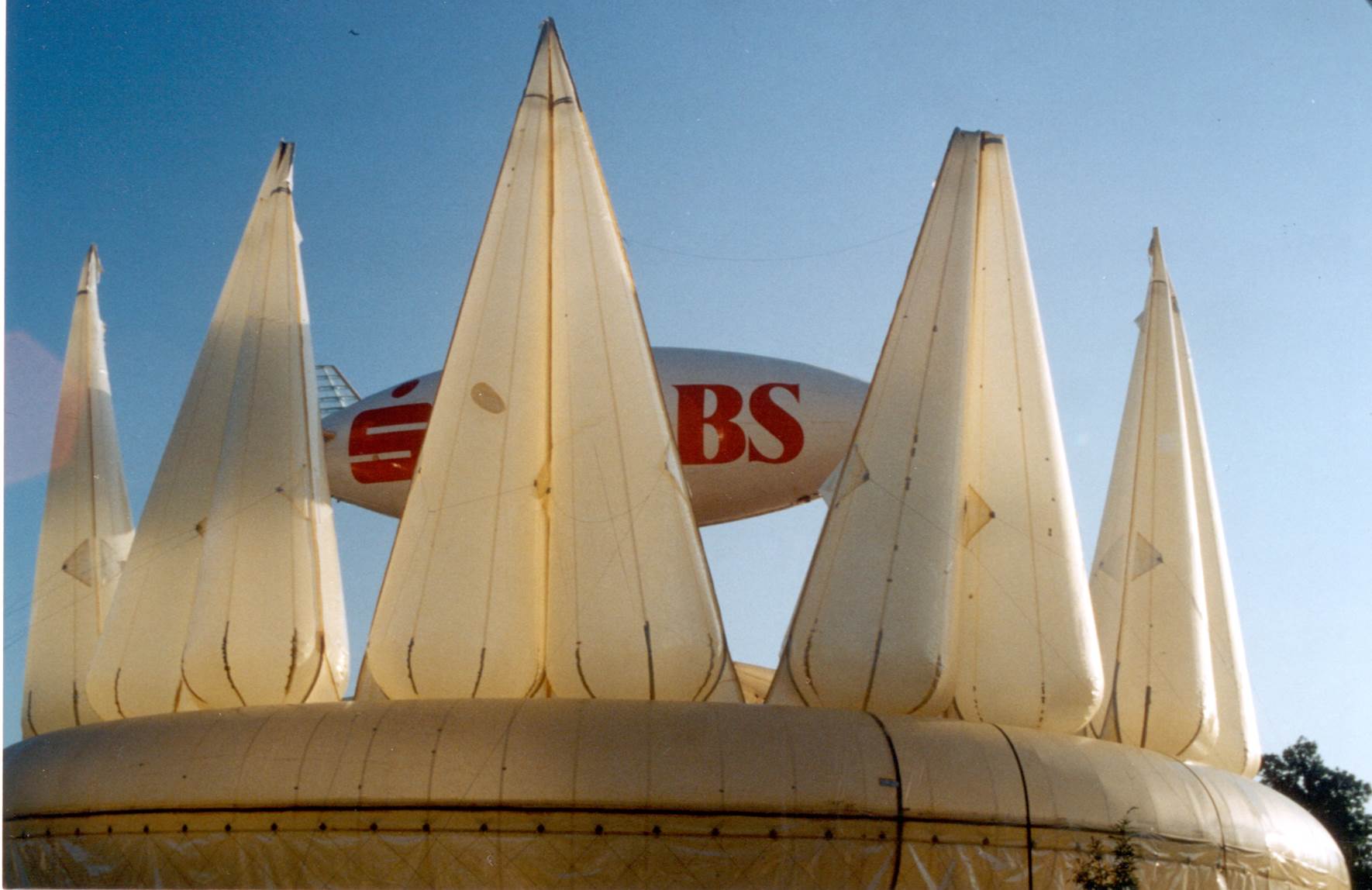
Developed as a landmark for a major public exhibition in Stuttgart, HELION was conceived to question one of architecture's oldest assumptions: that every building must begin with the ground. Instead of relying solely on mass and compression, the project combines helium-supported buoyancy, membrane engineering and precisely balanced anchoring systems to create a volume that appears almost detached from the earth. Its elegant white form seems calm and effortless, yet every movement is the result of carefully orchestrated engineering. What appears almost impossible is, in fact, a precisely controlled architectural system.
Behind HELION's graceful appearance lies decades of aerospace research and lightweight engineering developed within the TAO Group. Every force inside the structure, buoyancy, membrane tension, pressure, movement and stabilization, is precisely calculated to create equilibrium. At its centre, a kinetic roof unfolds like the petals of a flower, opening to release a solar airship into the sky. In this brief transformation, the distinction between architecture and performance disappears. HELION is not simply a structure that floats. It is a demonstration that the future of architecture may no longer be defined by heavier materials, but by lighter ideas.
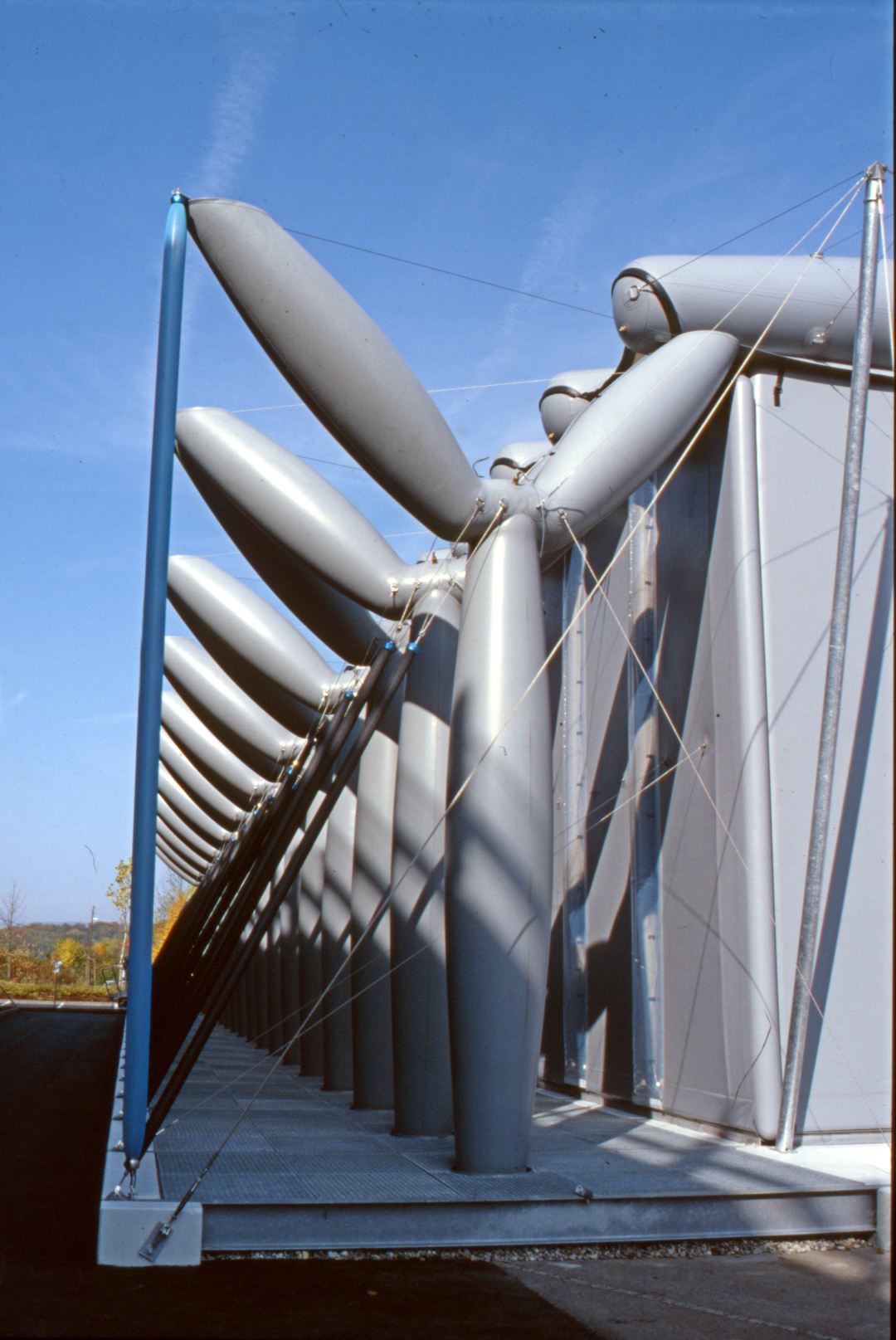
Inflated form can become landmark, enclosure, threshold, or roof.
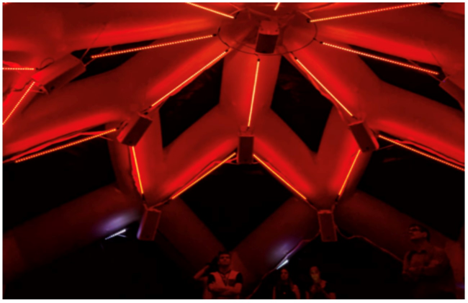
The system language adapts to public space, cultural programs, temporary environments, and site-specific architectural situations.
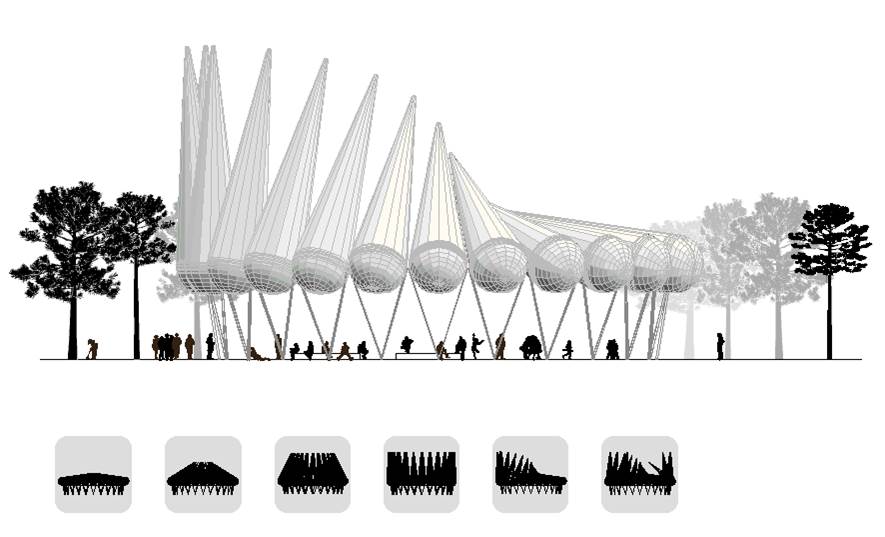
HELION studies a kinetic floating landmark as transformative public architecture.
Begin a conversation with us about inflatable architectural systems.
For project inquiries, collaborations, and research-led spatial proposals, contact the TAO Group team directly.
Email the studio