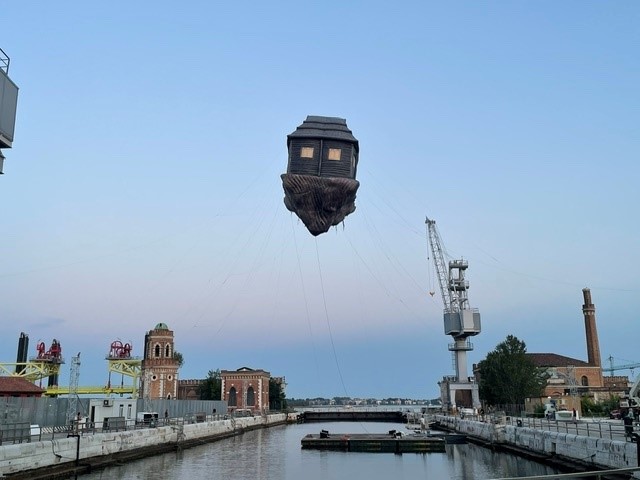
Art Work NABATELE / Atmospheric Airborne Architecture

A suspended architectural object shaped by silence, lift, and atmosphere.

NABATELE investigates the fragile boundary between airborne structure and architectural presence.

Featured — Mission Venice
Project type
Atmospheric airborne architecture
System
Buoyancy-led membranes, LPS and inner membranes/structure system
Status
Collateral Project of the Biennale Venice 2026
Atmosphere
Suspended, philosophical, dreamlike, floating

What is the Art Object Nabatele ?

Inspired by the geometry of a historic wooden synagogue, NABATELE reinterprets cultural memory through contemporary membrane architecture. The familiar silhouette remains. Its foundations do not. Beneath the structure, a fragmented rock appears suspended in the air, as if an entire piece of landscape had been carefully lifted from its original home. Together they create an image that feels both impossible and strangely familiar, a shelter detached from geography, yet deeply connected to history. By day, this special kind of inflatable architecture appears almost weightless against the Venetian sky. By night, it becomes a quiet beacon above the lagoon, glowing softly from within and transforming into an atmospheric landmark visible across the water. This is a very thoughtful art object of artist Anna Kamyshan.

The serenity of NABATELE conceals an extraordinary level of engineering. Every movement, every moment of stability and every subtle response to wind is made possible through aerospace-derived lighter-than-air technologies developed by the TAO Group. Custom-designed helium gas cells provide lift. Advanced membrane systems define the architectural form. Pressure-controlled behaviour, stabilisation technologies and carefully engineered safety systems maintain equilibrium under continuously changing environmental conditions. Nothing appears mechanical. Nothing appears forced. Yet every movement is precisely calculated. NABATELE demonstrates that airborne architecture is no longer a speculative vision. It is an engineered reality.

NABATELE / Mission Inflatables

Mission Inflatables

The reflection "Mission Inflatables" writes about the invisible as a fleeting form through air, membrane, light, and equilibrium.
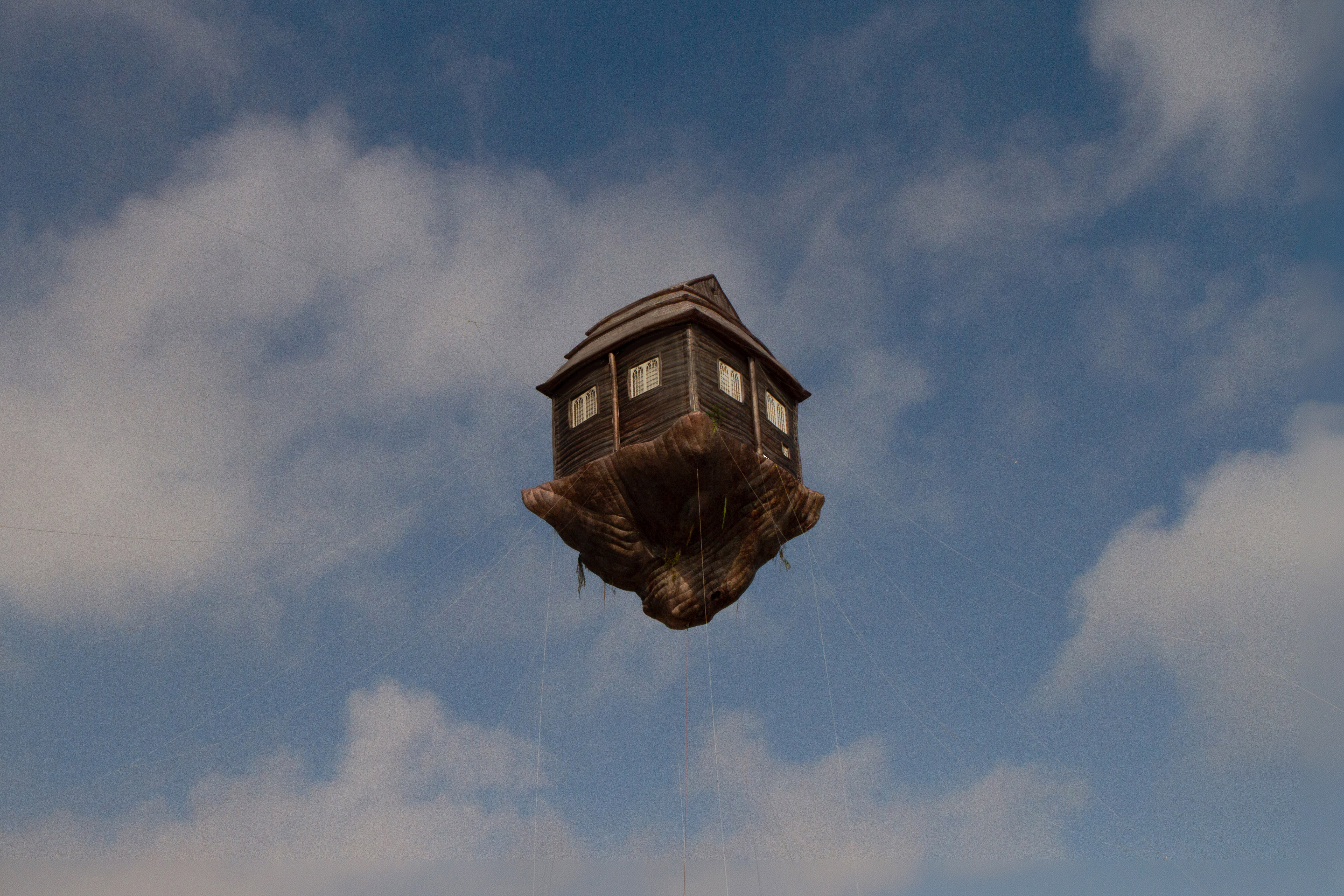
Floating home with eternal light: Hope, protection and love ...

NABATELE presented an extraordinary engineering challenge. Unlike a conventional aerostat, its shape was not defined by aerodynamic efficiency. The architectural and artistic form came first and the lighter-than-air engineering had to adapt to it.

The large tethered structure of this inflatable architecture had to generate sufficient buoyancy to become airborne while remaining controllable under the changing wind conditions of the Venetian Lagoon. At the heart of the system are custom-designed helium cells developed and manufactured by TAO. Rather than determining the external shape of the structure, the cells had to adapt precisely to the complex internal geometry of the artwork.

This was anything but conventional.

The available volume of this huge aerostat extended through fundamentally different spatial zones: the triangular roof geometry, the rigid central volume of the interior and the irregular, rock-like lower section. Each area imposed different geometric and structural constraints on the design of the helium cells.

TAO therefore translated the artistic geometry into a functional lighter-than-air system, developing the helium cell geometries, patterns, material configuration, attachments and integration required to distribute buoyancy throughout the structure of this floating building while preserving the intended architectural form.

The architecture defined the shape. Our TAO engineering made it fly.

The internal helium cells, the valves, the inflation/deflation system, the LPS and so much more technical details regarding buoancy have been individually designed, patterned, constructed, welded and assembled at TAO in Germany. Designed, engineered and handmade with dedication profession in Germany.
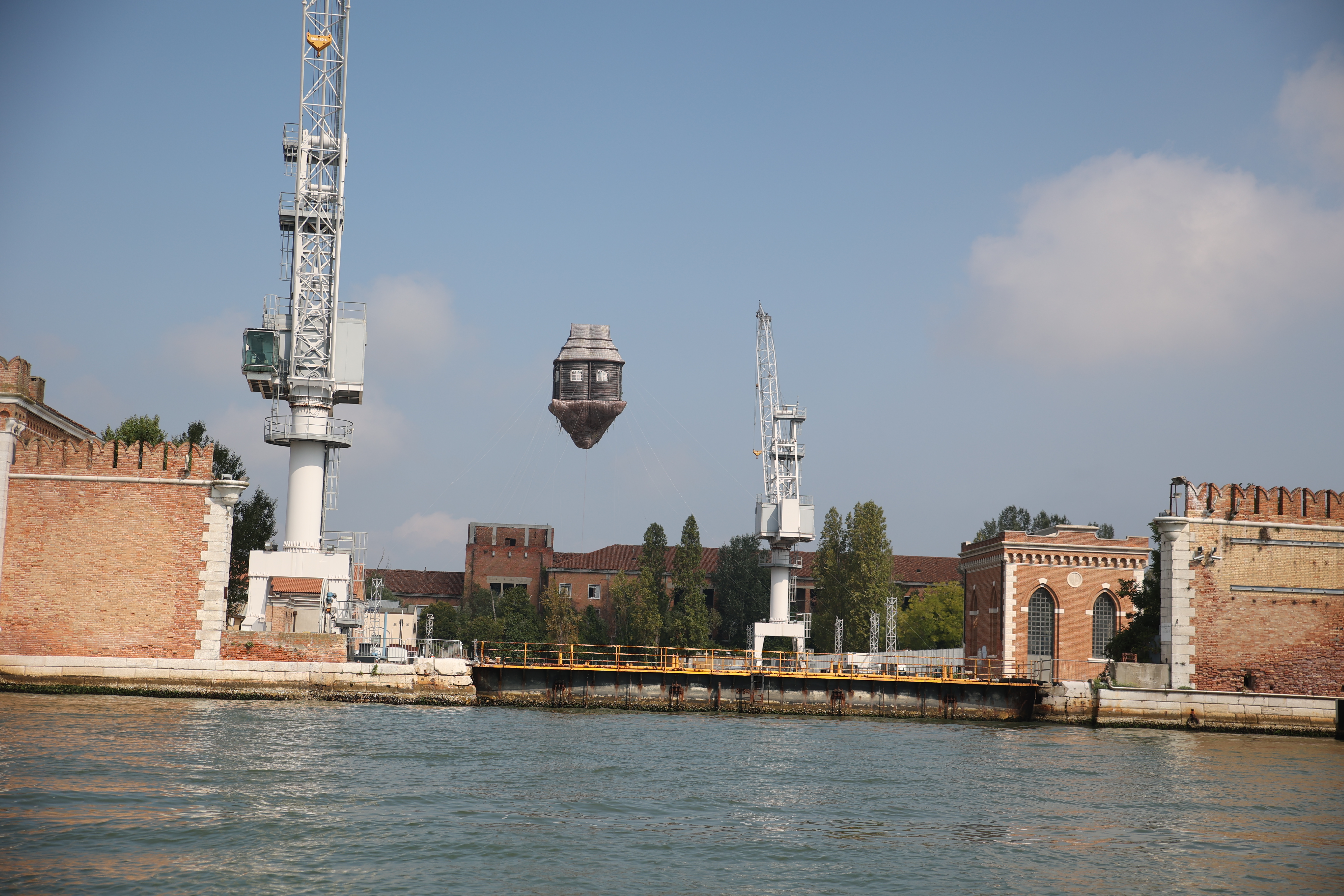
Suspension

The structure appears less placed than held.